

Open-Ended Play and School Readiness
How do we prepare young children for kindergarten? What nurtures their creativity, supports mental health, and builds problem-solving skills that last a lifetime?
The answer is both simpler and more powerful than you may think: open-ended play.
When we provide children with the time, space, and materials for open-ended play, we support their social, emotional, and cognitive growth, strengthening brain development, and promoting creativity and mental well-being.
Open-ended play can be a powerful force in a child’s life. But what exactly is it? How is it different from other kinds of play? How can we support it?
We’ll explore all of that and more in this blog series on play.

What Is Open-Ended Play?
Open-ended play is a specific kind of play with particularly powerful developmental benefits. It is child-led, flexible, and rich with possibility.
In open-ended play, children decide:
- What to play
- How to use materials
- How play evolves
- How long play lasts

There are no set instructions, no “right way,” and no predetermined outcome. Open-ended play is filled with curiosity, wonder, and freedom. Children explore, create, and imagine without being confined by rigid goals or rules.
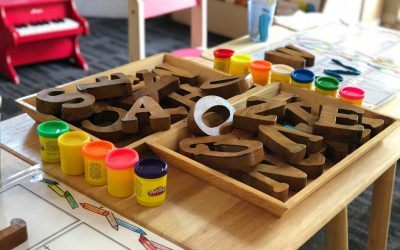
Materials that lend themselves to open-ended play include:
- Blocks and construction toys
- Loose parts (shells, fabric, bottle caps, sticks)
- Art materials
- Dramatic play props
- Sensory activities
- Outdoor and nature-based materials
Although, it is important to remember that what defines open-ended play is not specifically what the materials are, but rather how they are used. In open-ended play, children make decisions about how they play and what they play.
Directed Play: How Is It Different?
Directed play involves a structure to be followed or specific outcomes that are expected and desired. Teacher-led activities, puzzles, and board games are all examples of directed play and children can benefit greatly from them. However, sometimes these types of play are offered at the exclusion of open-ended activities and then children miss out on important joyful and developmentally supportive experiences.
Additionally, there are some directed tasks, like craft projects, worksheets, and activities that require children to sit too long, that should be avoided in early childhood contexts. They are developmentally inappropriate and, in addition to not being effective teaching strategies, they can interfere with children’s creativity and their ability to see themselves as successful learners. Too heavy of focus on adult directed tasks can lead to challenging behaviors as children are resistant or required to work outside of their developmental capabilities.
Real-Life Examples: Open-Ended vs. Directed Activities
Understanding the context of how materials are used is key to recognizing open-ended play. The same materials could be used for both open-ended play and directed play. To help better understand the distinction, we will look at both a painting activity and block play through the lens of open-ended play and directed play.

Painting and Block Play as Open-Ended Activities
- Painting: Children are offered paint, brushes, sponges, stamps, and paper. They may choose whether to participate. They decide what to create and how long to paint.
- Block Play: A group of children gather in the block area and decides to build a racetrack. They use recycled materials from the maker’s space to create ramps and tunnels. They are fully immersed in the process for the entire play period.
Painting and Block Play as Directed Activities
- Painting: The theme the class is exploring is “underwater.” Each child is asked to paint a scene with fish and seaweed. Participation is expected.
- Block Play: The class is studying farms. Children are told to build barns and use plastic farm animals during block time. There are no other materials available to them. Halfway through choice time they are pulled from play for a small group activity.
The difference? In open-ended play, children have choice and creative freedom. In directed play, adults set the terms.
The Decline of Open-Ended Play
Despite its many benefits, many children don’t have opportunities for open-ended play. Between the increased use of and reliance on screens, increased time spent in organized activities, and busy schedules, there often simply isn’t time for this important type of play.
Some children have had so few opportunities for open-ended play, they don’t have the skills to get started. That’s why it’s so important to recognize what open-ended play is and to intentionally create time and space for it.
Why Is Open-Ended Play So Important?
In addition to being a lot of fun, open-ended play builds foundational skills children will use throughout their lives.
- Emotional Intelligence
When children create and explore freely, they practice taking on roles, expressing feelings, and navigating social dynamics. This helps build empathy and emotional understanding.
Additionally, cooperation, communication, and collaboration are all practiced naturally in peer-led play.
- Cognitive Development
Open-ended play encourages critical thinking and problem-solving. Children experiment, make decisions, and adjust their plans, all skills that support brain development and academic readiness.

- Mental Health and Well-Being
Play is a natural stress reliever. With no pressure to perform or produce a certain outcome, children can unwind and express themselves safely. Sensory and physical play helps lower stress hormones and promote calm and self-regulation. When children direct their own play, they build independence, confidence, and self-esteem.
- Brain Development
The early years are a time of rapid brain growth. Open-ended play supports neuroplasticity by strengthening brain connections through creative thinking, active problem-solving and introspection.
In Conclusion
Open-ended play is both very simple and deeply powerful.
By allowing children to lead, imagine, and explore, we help them develop essential skills: creativity, resilience, emotional regulation, and cognitive flexibility. It supports healthy brain development and sets the stage for lifelong learning and well-being.
Coming Up Next: Strategies for Supporting Open-Ended Play
Next week, we’ll share 4 proven strategies to create environments that nurture open-ended play. You’ll learn practical tips for creating time, space, and supporting routines.

Sarah Grissom – U4C Education Specialist
Sarah Grissom is an Education Specialist at United 4 Children. She develops and provides professional development for early childhood educators. With a master’s degree in early childhood education and a bachelor’s degree in political science she has spent the past 25 years working with and advocating for children and families. She lives in St. Louis with her husband, two children, and dog. She enjoys reading non-fiction and pinning recipes she will never make.

5 Great Low-Cost Must-Have “Toys” for Early Childhood Educators and Families
Creating an engaging early childhood classroom doesn't have to break the bank. Simple, open-ended materials can make some of the best toys! The following examples provide children with hours of entertainment while supporting physical and cognitive development that is...
What Families Should Know When Choosing a Safe Child Care Program
Choosing a child care program is one of the most important decisions a family can make. While convenience and cost matter, safety must always come first. A safe, high-quality child care environment does more than prevent harm, it supports children’s development,...

Creating Safe Sleep Environments: A Guide for Early Childhood Educators and Families
Early childhood educators and families share the responsibility of helping infants sleep safely. Consistent safe sleep practices in child care programs and at home reduce the risk of sleep-related incidents, including sudden infant death syndrome (SIDS). When...
